
OPED by Kenneth Engblom, Vice President, Wärtsilä Energy, Europe and Africa
Why a Hybrid Flexibility Strategy Will Deliver Better Results Than a Storage-Only Approach
Africa’s energy transition is approaching a pivotal moment. With access to some of the world’s most abundant solar and wind resources, the continent is exceptionally well-positioned to accelerate toward a future powered by affordable renewable energy.
However, as governments and energy planners expand renewable deployment, one persistent misconception continues to influence discussions: the belief that battery energy storage systems (BESS) alone can provide all the flexibility required to support power grids with high levels of intermittent renewable generation. This assumption is not only incomplete, but it also risks making Africa’s energy transition more costly, less dependable, and ultimately slower to achieve.
The issue is not whether energy storage is necessary. Its importance is beyond question. The real challenge is determining whether storage on its own can deliver all the flexibility modern power systems require. Increasingly, evidence from system-wide analysis suggests that it cannot.
Flexibility Comes in Many Forms
Electricity networks do not depend on a single category of flexibility; they require multiple layers of support working together.
As renewable energy penetration increases, system variability inevitably rises as well. Solar and wind generation introduce fluctuations that can occur over timescales ranging from milliseconds to entire seasons. Managing these variations requires technologies capable of responding effectively across all time horizons.
Battery storage is particularly effective at delivering fast-response services. It can provide sub-second balancing, frequency regulation, and short-duration energy shifting with exceptional efficiency.
Yet this represents only one segment of the flexibility spectrum.
Longer-duration balancing requirements—such as meeting evening demand peaks, compensating for several consecutive days of low renewable generation, or managing seasonal fluctuations—require a different set of capabilities. These include dispatchability, scalability, and the ability to provide cost-effective power whenever and for however long it is needed. Flexible engine power plants fulfil this role.
Engine-based power plants provide balancing services at the hourly, daily, and seasonal level, supplying electricity when renewable sources and storage systems are unable to meet demand.
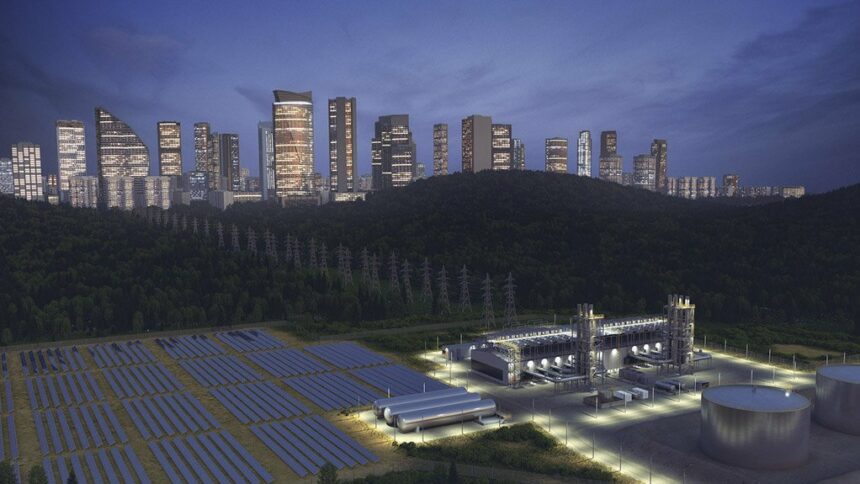
Viewed from this perspective, battery energy storage systems and internal combustion engine (ICE) power plants are not competing technologies. Rather, they are complementary components of a resilient power system.
The Financial Impact of Overdependence on Storage
The notion that battery storage alone can provide all necessary flexibility often overlooks a critical economic reality: storage costs increase significantly as duration requirements grow.
Short-duration batteries are becoming increasingly affordable and effective. However, extending storage capacity to cover longer periods—such as multi-hour evening demand peaks or extended periods of low renewable generation—rapidly becomes prohibitively expensive.
This challenge is especially relevant across Africa, where electricity demand is growing quickly, grid infrastructure is often underdeveloped, financing remains costly, and reliability is a top priority.
Building a power system that relies solely on storage to address every flexibility requirement means installing battery capacity capable of covering infrequent but essential events. As a result, large portions of that capacity may remain underutilised for much of the time, driving up overall system costs.
By combining battery storage with flexible engine generation, each technology can be deployed where it provides the greatest value. This approach minimises overall investment requirements while maintaining high levels of system reliability.
This conclusion is supported by extensive modelling rather than theory alone. Detailed power system analyses conducted across multiple African markets consistently demonstrate that systems incorporating the optimal balance of renewable energy, storage, and flexible engines deliver the lowest overall electricity costs while preserving grid stability.
Africa’s Energy Reality Requires Practical Solutions
Discussions around grid flexibility are often influenced by experiences from mature and highly interconnected power systems. Africa, however, faces a fundamentally different set of circumstances.
More than 500 million people across the continent still lack access to electricity, while many existing grids operate with limited infrastructure and constrained reliability.
In this environment, reliability is not simply a desirable feature—it is a fundamental requirement.
Power systems that cannot consistently deliver electricity when solar generation declines after sunset or when wind output falls short will struggle to support industrial development, economic expansion, and broader social progress. Such systems are also unlikely to attract the investment necessary to accelerate renewable deployment.
Flexible engine generation offers a practical and effective solution. These facilities can be deployed rapidly, expanded incrementally, and operated efficiently even at partial load levels. These characteristics make them particularly well-suited to supporting renewable integration in emerging electricity systems.
Experience from numerous African energy markets has already demonstrated that combining renewable generation with flexible gas-engine technology can simultaneously reduce costs and lower emissions when compared with traditional baseload generation models.
Preventing a New Type of Carbon Lock-In
One concern frequently raised is that investment in engine-based power generation could lock African countries into long-term dependence on fossil fuels.
While this concern is understandable, it no longer reflects the capabilities of modern engine technology.
Today’s flexible engine power plants are designed to operate on a variety of fuels. While they may run on natural gas today, they are also capable of transitioning to sustainable alternatives in the future, including green hydrogen, ammonia, and synthetic fuels as these options become commercially viable.
As a result, engine power plants should be viewed as a bridge to a low-carbon future rather than an obstacle to achieving it. Instead of locking in emissions, they enable higher levels of renewable integration today while remaining compatible with long-term decarbonisation objectives.
Re-Evaluating the Importance of Flexibility
The greatest risk for Africa is not investing in flexible engine capacity.
The greater risk lies in failing to develop sufficient flexibility capacity altogether.
Some influential narratives, including recent continental energy outlooks, recognise the importance of storage technologies and gas-to-power solutions. However, they often continue to underestimate the broader system value of flexible engine technologies in enabling high-renewable electricity systems at the lowest possible cost.
This oversight has significant implications. If policymakers design future power systems based on incomplete assumptions about flexibility requirements, they risk creating grids that are either unnecessarily expensive or insufficiently resilient.
A Balanced Way Forward
Africa does not need to choose between batteries and flexible engines.
Instead, it must combine these technologies strategically. Renewable energy provides the lowest-cost source of electricity. Battery storage delivers rapid-response and short-duration flexibility. Flexible engine generation supplies dispatchable, long-duration capacity whenever it is required.
Together, these technologies create an energy system that is not only cleaner, but also more affordable and more reliable.
The energy transition should not be focused on maximising the deployment of a single technology. Its success depends on optimising the performance of the entire system.
For Africa, this means embracing a practical hybrid strategy—one that recognises flexibility as a multidimensional challenge and acknowledges that no single technology can address every requirement on its own.